Year 3 of joint research trial confirms that low-heat cultivation under full LED can deliver substantial energy savings, higher yields, and improved fruit quality
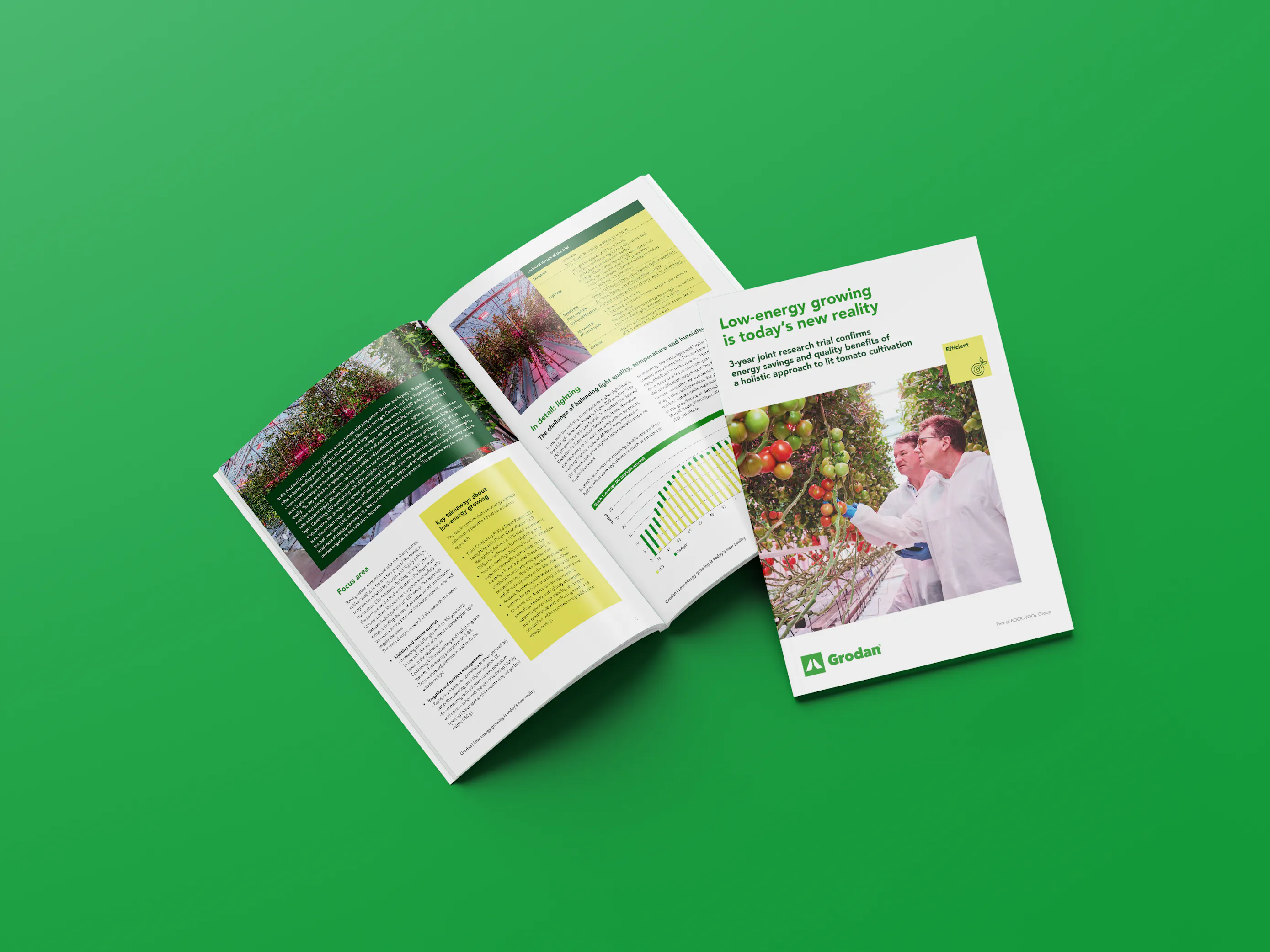
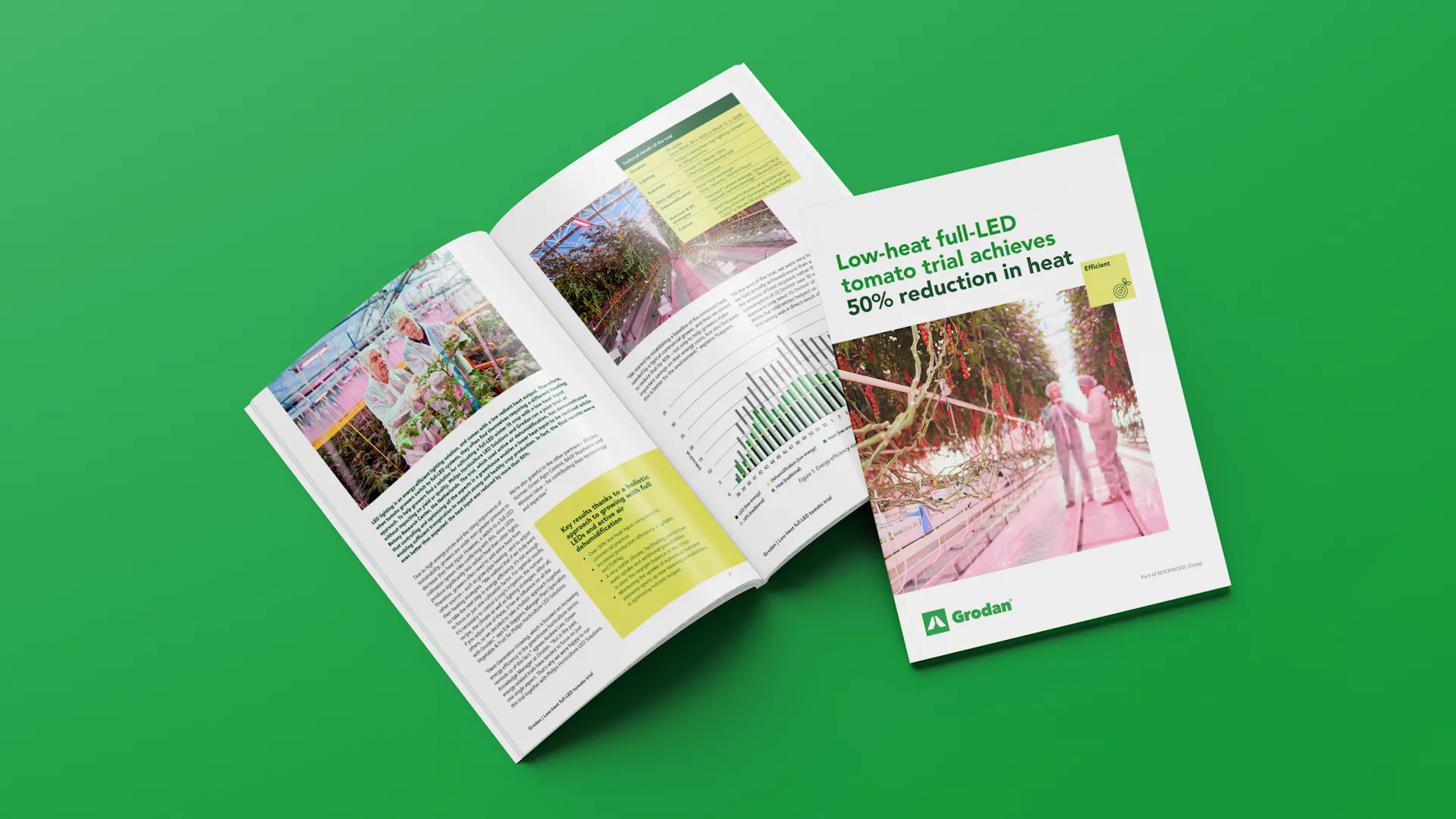
In the third and final year of their joint low-energy tomato trial, Grodan and Signify, together with industry partners Ridder, Wireless Value, Normec Groen Agro Control and Axia Vegetable Seeds, demonstrated that low-energy tomato cultivation is no longer a future concept but a commercially viable growing strategy. Building on the previous years' findings, the team successfully applied the holistic cultivation approach to larger truss tomatoes, confirming that carefully aligning lighting, irrigation, nutrition, and climate management enables growers to reduce heating energy input by more than 50% while maintaining crop stability and production.
The trial showed that combining full LED lighting, advanced screening strategies and active dehumidification creates the stable greenhouse conditions needed for sustainable energy savings. At the same time, the use of toplighting combined with interlighting increased yield by approximately 10%, improved fruit weight and supported faster crop development. Through precise nutrient steering based on plant uptake rather than EC alone, the team further improved crop balance and reduced quality issues such as blotchy ripening, demonstrating the value of data-driven cultivation in low-heat growing systems.
Key takeaways about low-energy growing
- More than 50% reduction in rail pipe heat input compared with common practice through the combination of full LED lighting, advanced screens and active dehumidification.
- Active dehumidification accounted for less than 4% of total energy input while ensuring a stable greenhouse climate.
- Approximately 10% higher yield achieved with the combination of toplighting and interlighting compared with toplighting alone.
- Increased fruit weight (+4%) and improved crop performance, including faster flowering, fruit set and the development of an additional cluster.
- Improved crop balance through targeted nutrient steering, with nitrate levels used to manage leaf area and generative growth more precisely.
- Reduced blotchy ripening and improved fruit quality through optimisation of potassium, calcium and nitrate ratios.
- Greater cultivation precision through integrated monitoring of root-zone conditions, climate, plant performance and nutrient uptake.
- Confirmation that low-energy tomato cultivation is commercially feasible when climate, irrigation, nutrition and lighting are managed as one integrated system.
Download the whitepaper and learn more!
Discover the complete Year 3 trial results, practical cultivation strategies and detailed recommendations for implementing low-energy tomato growing in commercial production.